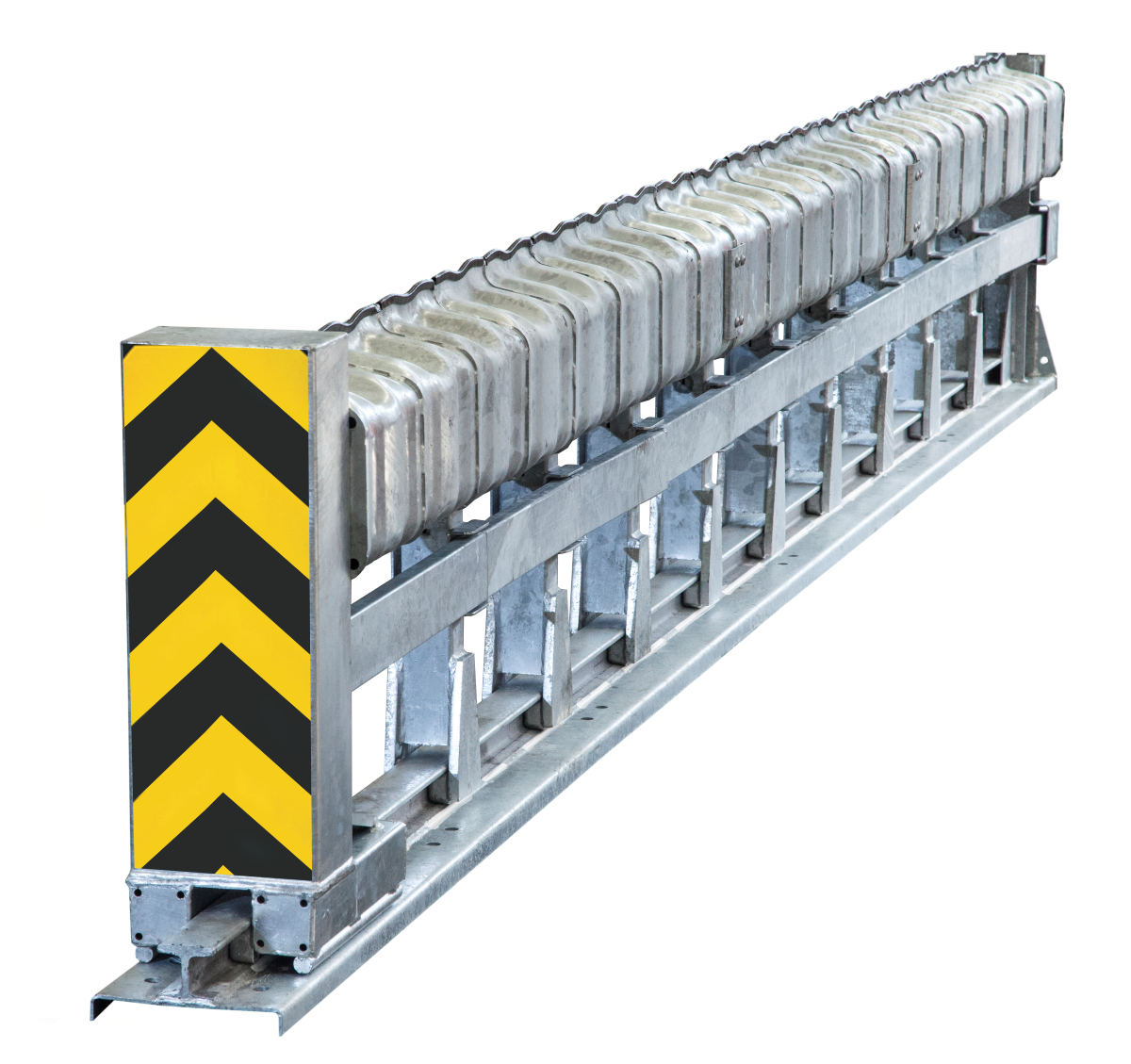
Avatar
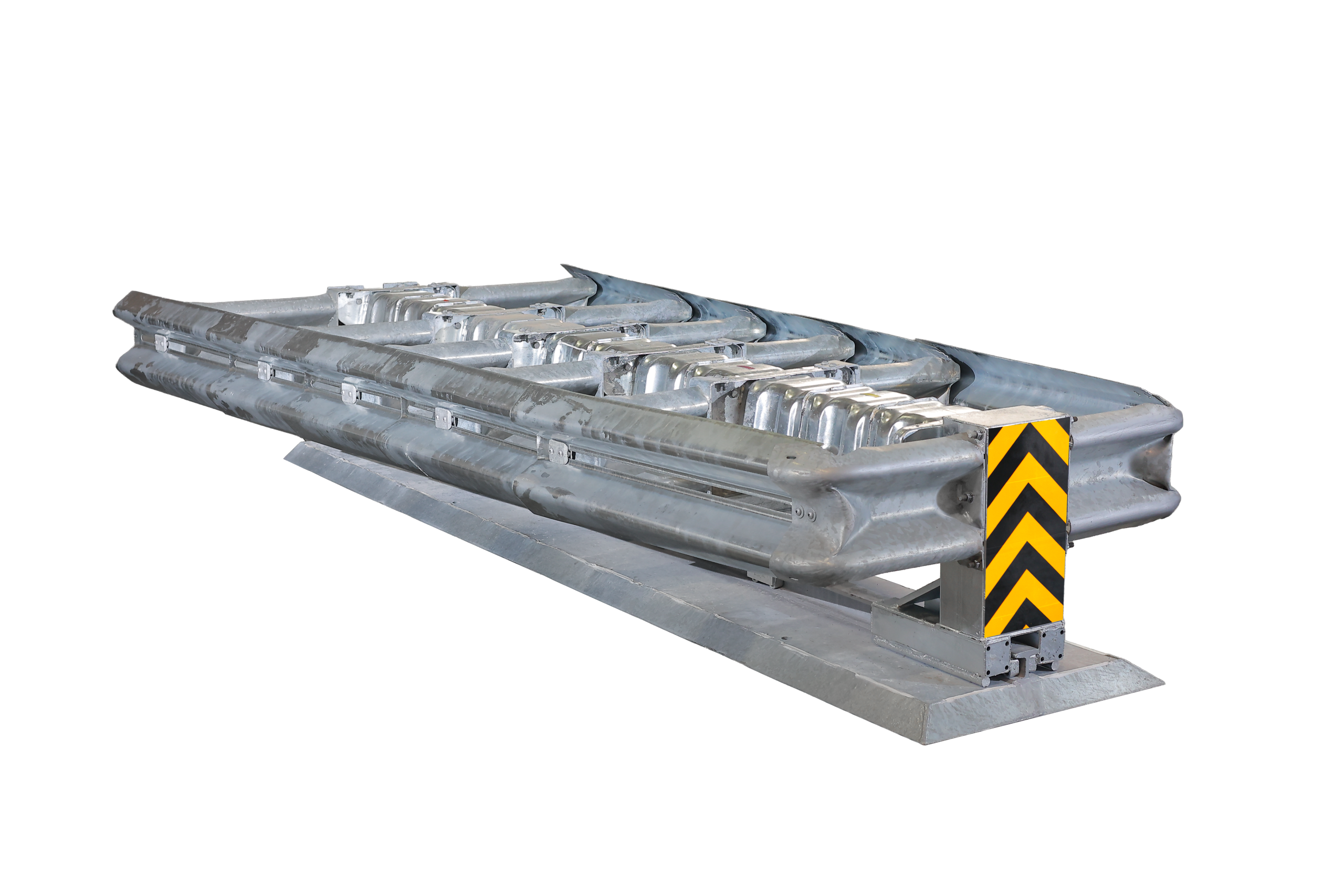
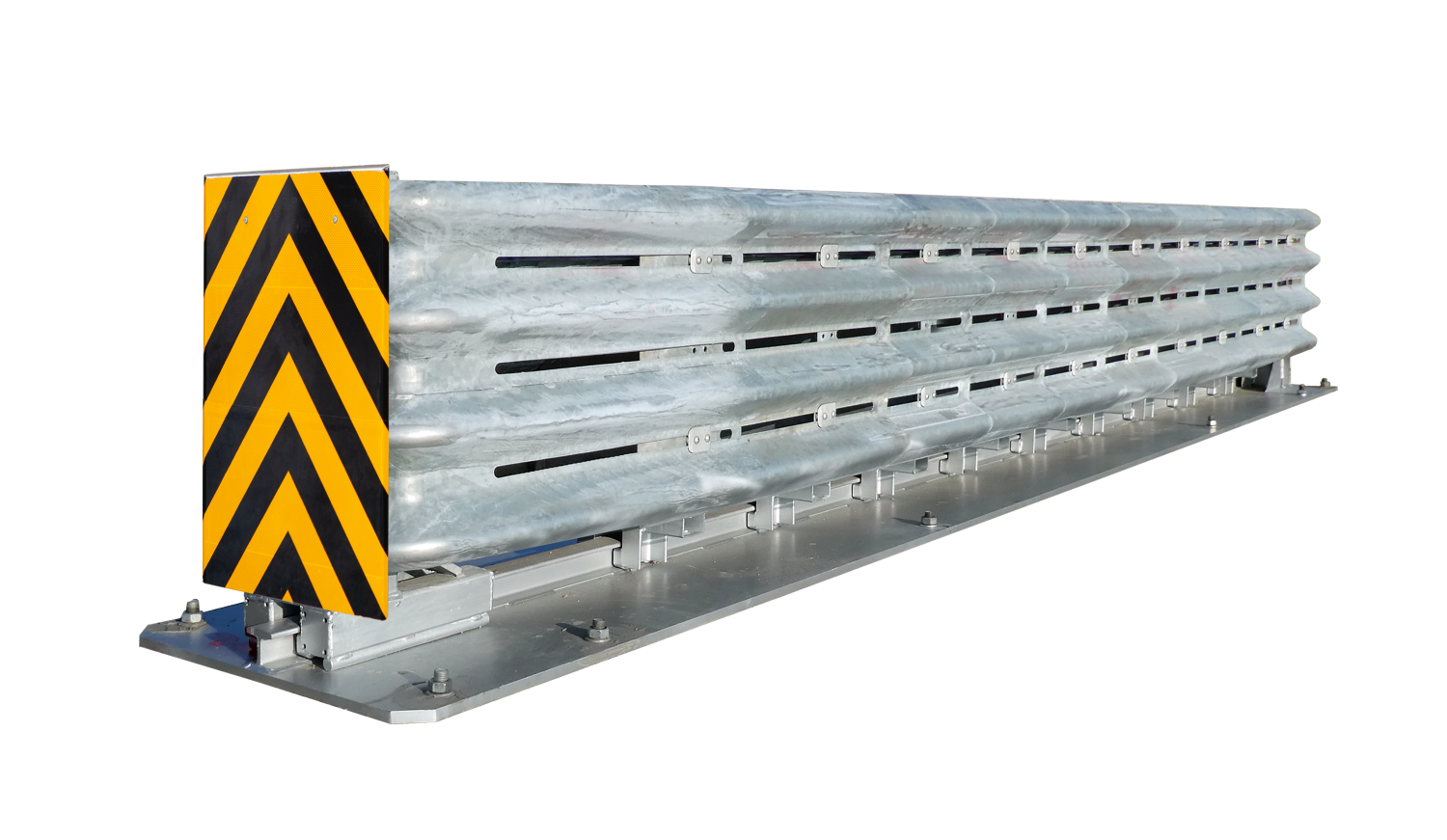
Avatar is a crash cushion with minimal anchoring, designed for use in work zones and special maintenance operations.

Leonidas
A very compact and highly performant crash cushion system designed for impacts up to 130 km/h. Available in several widths and shapes to shield many obstacles and is totally repairable.

ERMES CC
The safest and most versatile safety device, certified both as a crash cushion and as an energy absorbing end terminal, designed to cover small-sized obstacles such as the beginning of guardrails and concrete barriers.

Urban Area
SMA devices for urban areas are designed to protect specific types of obstacles such as poles, pillars, concrete curbs, traffic dividers, and tunnel entrances.

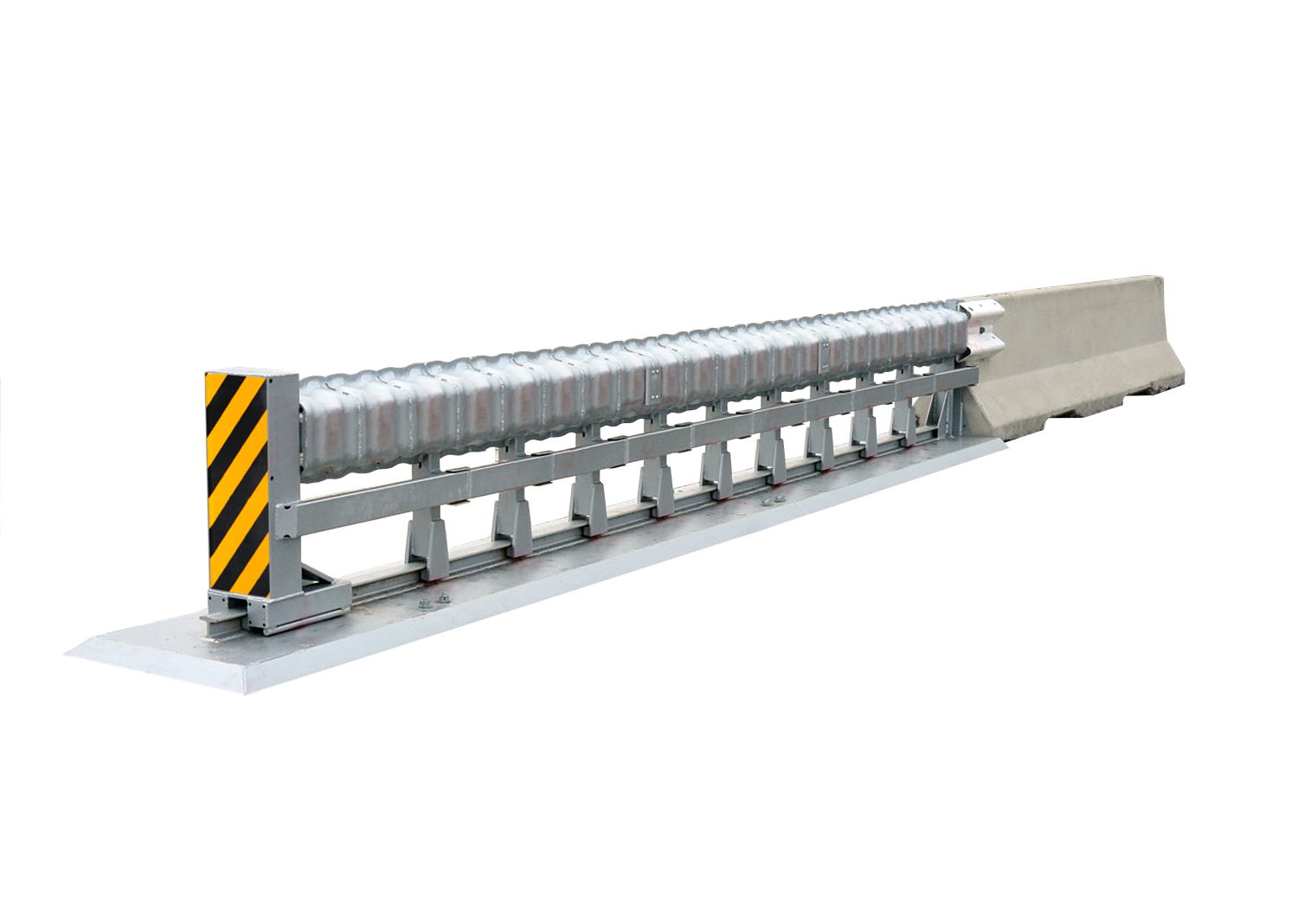
Taurus
The anchorless crash cushion to protect drivers and workers from accidents in the worksites. Preassembled, easy to handle and install with fast connection to temporary barriers.

Janus
Janus is the crash cushion that can also be used as a device to shield fixed obstacles in both traffic directions. Totally repairable and easy to install with a narrow shape and performance up to 110 kph. The system is provided in two pre-assembled modules that only require anchoring to the ground.

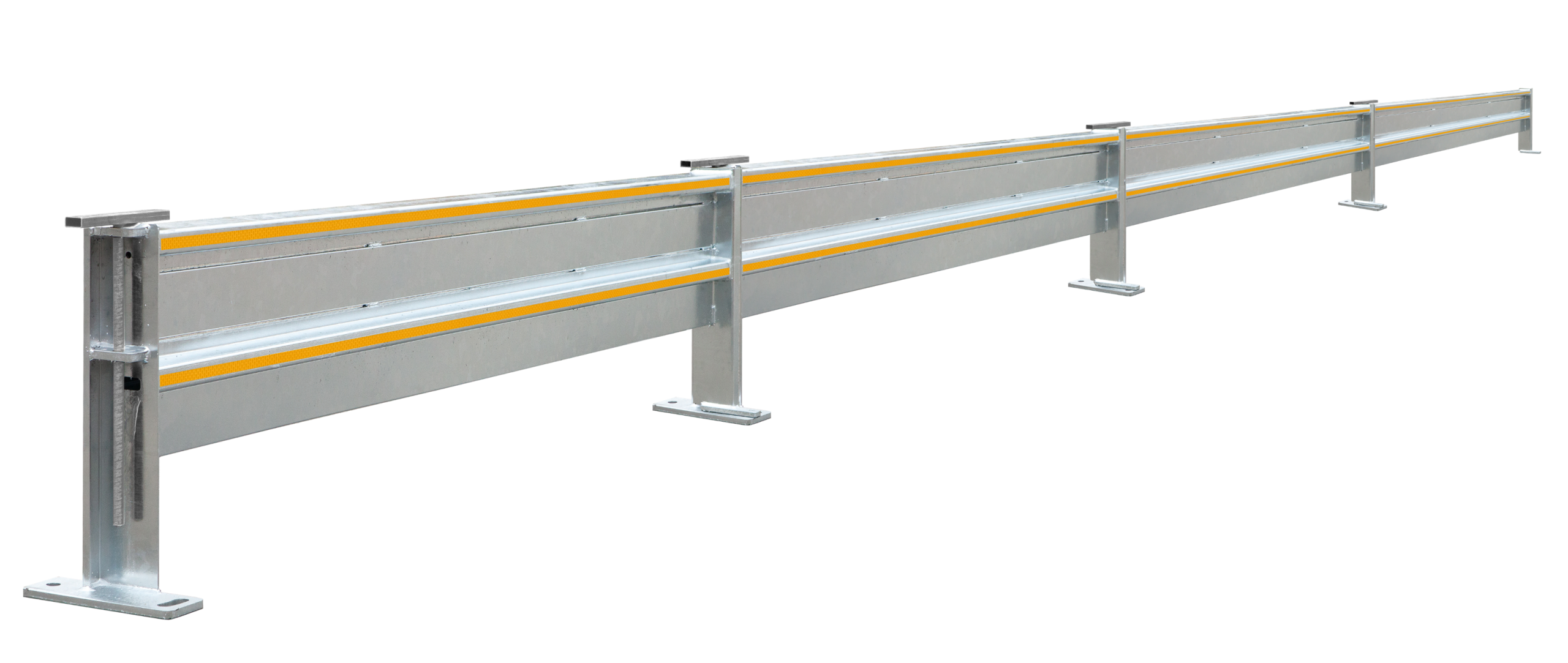
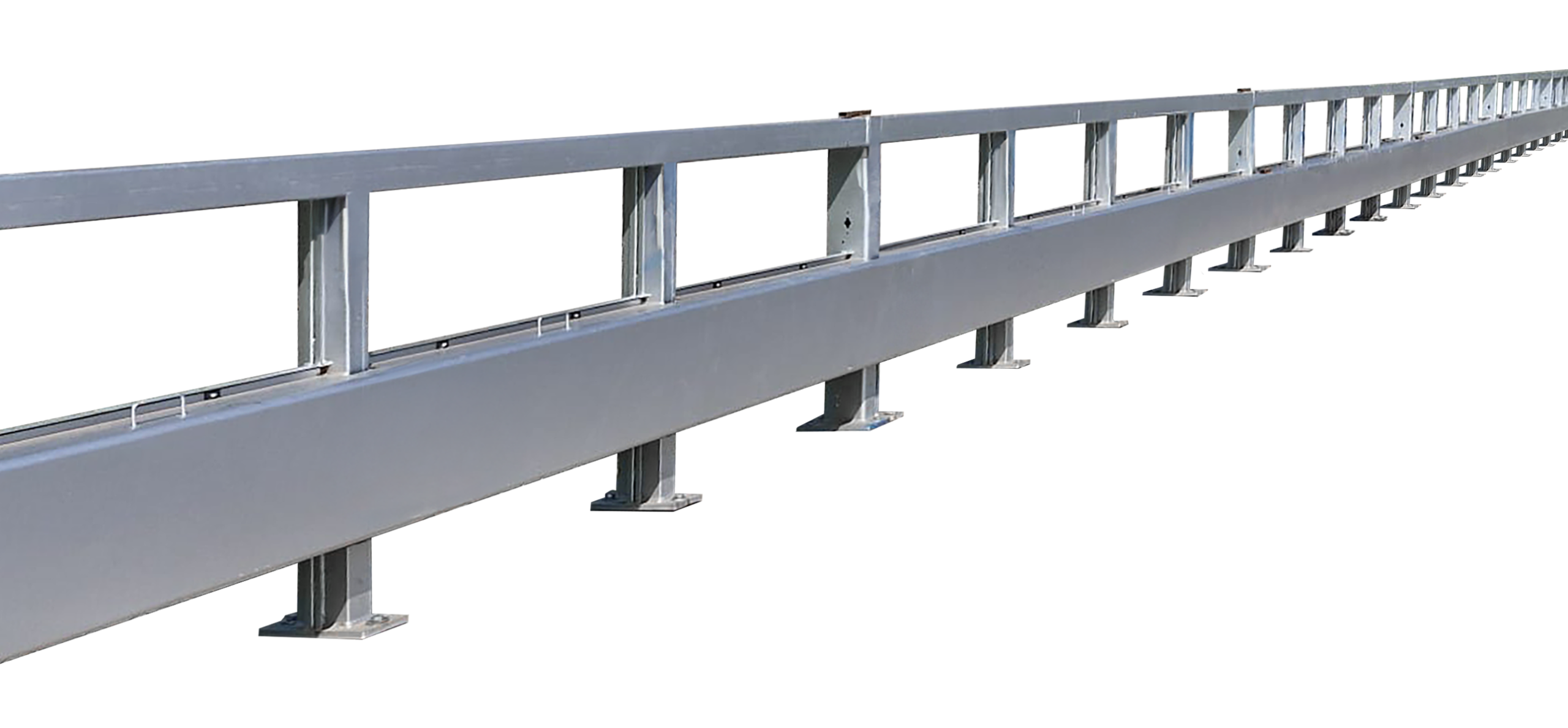
Andromeda
A modular barrier designed to be used in the median and in the verge. High containment level and easy installation process make this product suitable for bridges and motorways and urban roads.

Chronos
CHRONOS is the temporary barrier that redefines efficiency on work zones. The system consists of preassembled modules 3 meters long which are connected to each other through a locking pin. CHRONOS has been tested according to the EN 1317-2:2010 Standard.

Stargate
The Stargate barrier is an innovative, removable gate system designed to ensure safety and optimal traffic management in road infrastructures. Thanks to its compact design and high performance, it represents an effective solution for emergencies, ensuring quick opening in critical situations.

Titanus
The first barrier gate to contain heavy VEHICLES. Supplied in modules which make the system easy to handle, install and remove. Fast opening and easy connection to many barriers.

Geronimo
Designed to support road managers, the Geronimo monitoring system is a cutting-edge solution aimed at improving road safety through real-time detection and reporting of events via a camera connected to the barrier through a sensor.

Eagle
Designed to help the managers in the ISPE process. The monitoring system with low battery consumption, connection to the network and easy installation to guard the VRS operation.

Taurus MASH
Crash cushion designed for temporary use in roadwork and work zones. The device is delivered pre-assembled for quick and easy installation, with a structure that can be repaired after impact to reduce maintenance costs. It can be connected to all types of concrete and steel barriers, features an efficient and compact design, is non-gating, fully redirective, and operational on both sides thanks to its double-sided design.

Ermes MASH
MASH terminal designed to ensure maximum safety and ease of use. The device is delivered pre-assembled for quick and easy installation. It is a non-gating, fully redirective system tested according to MASH 2016. It can be connected to all types of concrete and steel barriers.

Hercules
The preassembled crash cushion tested with a 2270 kg pick up truck. Totally repairable and easy to anchor on concrete and asphalt. Connectable to the network through the SMA App.

Hercules 12
Redirective crash cushion designed to ensure maximum safety with minimum space requirements. The system is delivered fully assembled for quick installation. It is a non-gating system and integrates connection to a smart monitoring and management system. It is also equipped with a base plate to be anchored to the asphalt with only 12 holes, simplifying and speeding up installation.
Most Popular Searches
Most Popular Product
Product Categories
Most Popular Product
Blog Categories
Most Popular Blog

Quick Links
The behavior of frontal barriers is subject to evaluation by those tasked with selecting them for road use. The tests conducted on these systems involve frontal, angled, and lateral impacts. The way the barrier reacts allows for the classification of the tested system.
In the classification of restraint devices, the characteristics “gating/non-gating” and “redirective/non-redirective” are used to outline the behavior of a crash cushion or barrier terminal.
The standards involved are EN 1317 and MASH 2016, which employ the distinction between “redirective” and “non-redirective.”
“Redirectivity” is the ability of a device to contain the impact of a vehicle and guide it back onto the roadway, while a non-redirective device has not demonstrated such behavior in the event of a lateral impact.
According to the American MASH 2016 standard, a crash test for non-redirective devices is also required to understand their behavior.
Below is an excerpt from the MASH standard referencing evaluation criteria for lateral impacts:
“Note that non-redirective crash cushions are not designed to safely mitigate this type of impact and, therefore, occupant risk parameters are not among the recommended assessment criteria.
However, these values should be reported as a tool to enable user agencies to estimate the potential risk of using non-redirective crash cushions. Impacting vehicles must remain stable and upright during the test.”

The MASH standard further differentiates crash cushions and barrier terminals into “gating” and “non-gating” devices.
The literal meaning of “gating” is a “gate device” (from “gate”), referring to a device designed to allow a moving vehicle to pass through the barrier during impact and enter a “clear zone.”
A “clear zone” is an obstacle-free area designed for errant vehicles to stop safely, allowing the vehicle to decelerate. The size of this space is determined by the designer (e.g., for gating devices, it can be 6 meters wide and 24 meters long in some areas).
Conversely, a non-gating device does not allow the vehicle to leave the roadway during impact.
Non-gating devices also require a “clear zone,” but it is significantly smaller.

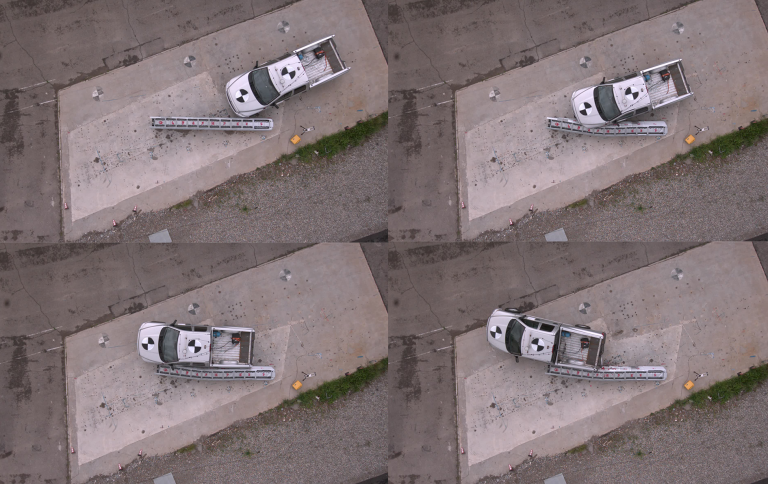
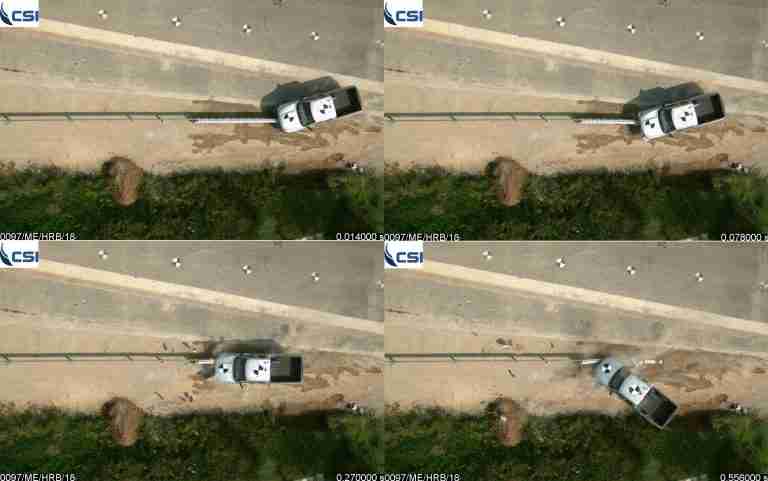
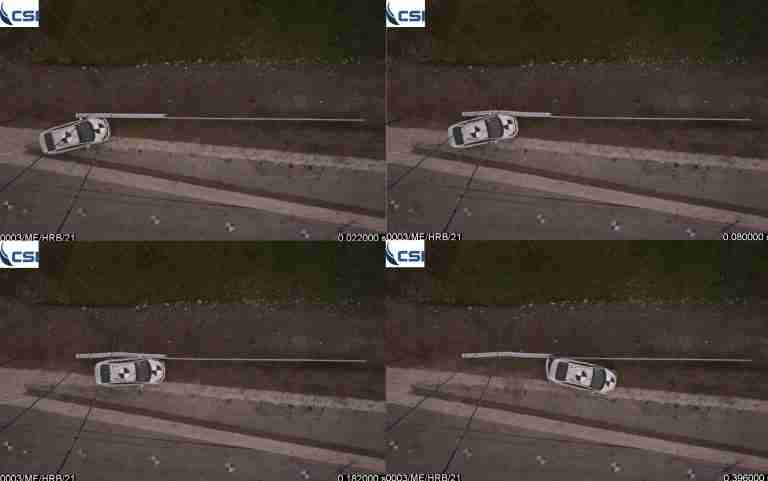
The fundamental difference lies in the crash tests performed. Specifically, Tests 32 (with a car) and 33 (with a pickup) according to the American standard determine whether the device behaves as gating or non-gating. These tests are conducted on terminals and crash cushions with a vehicle impacting the head or front of the system at a 15-degree angle.

Meanwhile, Tests 34 and 35, which involve a side impact on the device, determine whether a device can be classified as “redirective.” A “Critical Impact Point” (CIP) is defined as the point from which the device’s behavior can be considered non-penetrable and redirective. During MASH Test 35, a 2,270 kg vehicle is directed toward the device at the critical point with an impact angle of 25 degrees.

A vehicle restraint system can be:
For simplicity, we focus on the first two types and outline their differences:
A non-gating redirective device can be used in place of a gating redirective device, but not vice
versa.
Although EN 1317 does not require the use of non-gating devices, they are the ideal option for countries with limited space on the road network. The presence of poles, trees along the roadside, or drainage ditches necessitates a “non-penetrable” device as the only feasible solution.
Both gating and non-gating devices require a clear zone. However, while gating devices need a large stopping area for the vehicle, non-gating devices require a significantly smaller free area since they stop the vehicle on the roadway. Therefore, even in the absence of a clear zone, non-gating reduces the likelihood of a post-collision accident.
Crash cushions used in medians are non-gating because their application reduces the risk of the vehicle crossing into the opposite lane, avoiding danger to both the driver involved in the collision and other road users.
However, crash cushions have a considerably larger transverse footprint than barrier terminals. As a result, applying these devices is not always feasible on the roadside edge or in medians.
All devices supplied by SMA, both MASH- and EN 1317-tested, are non-gating redirective.
AASHTO Manual for Assessing Safety Hardware 2016

SMA Road Safety designs and develops crash barriers that provides maximum containment, great performances and minimal size on the road.
ADDRESS
Headquarters
Guest Entrance:
Via G.B. Pirelli, Zona Industriale ASI Sud - 81025 Marcianise (Caserta) - Italy
Operative Site:
Via Dante Giacosa snc, Zona Industriale ASI Sud - 81025 Marcianise (Caserta) - Italy
Registered Office:
Via Eduardo De Filippo, 11 - 80013 Casalnuvo di Napoli (Napoli) - Italy